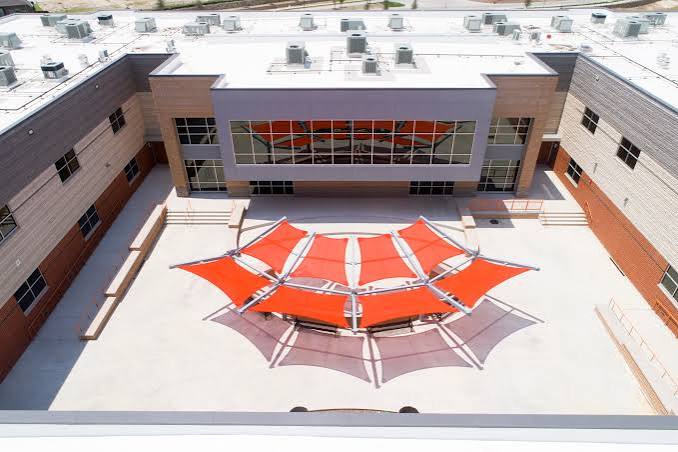
Schools across the UAE face a unique challenge: providing safe, comfortable outdoor spaces for students despite intense sunlight and high temperatures for much of the year. **School shades UAE** have become essential infrastructure for educational institutions in Dubai, Abu Dhabi, Sharjah, and beyond, allowing children to play, learn, and move between buildings without direct exposure to harsh conditions.
This guide explains the types of school shade structures available, key design considerations, and practical factors for schools planning to install or upgrade outdoor shading.
What Are School Shades?
School shade structures are engineered systems designed to create covered outdoor areas on school campuses. They typically consist of a fabric membrane or roof panel supported by a steel or aluminium frame, with foundations anchoring the structure to the ground.
Unlike temporary umbrellas or basic awnings, school shades are permanent or semi-permanent installations built to withstand UAE weather conditions. They can be standalone structures or integrated with existing buildings and facilities. Modern suppliers offer customized systems designed around specific school layouts, from small courtyard covers to large playground canopies.
Why Do Schools in the UAE Need Shade Structures?
The UAE climate presents significant challenges for outdoor activities. Surface temperatures in Dubai can routinely exceed 50°C during summer months, and UV radiation levels rank among the highest globally. Without adequate shade, outdoor areas remain unusable for much of the school year.
Shade structures address several practical needs:
– Strong sunlight and UV exposure – Quality shade fabrics can block 90–95% of UV radiation, reducing direct sun exposure for students and staff
– High temperatures – Shaded areas provide noticeably cooler environments for outdoor activities and waiting areas
– Better use of outdoor spaces – Playgrounds, sports courts, and courtyards become usable during more of the school day
– Protection of equipment – Playground equipment and outdoor furniture are shielded from direct sun damage
– Student comfort – Covered walkways and waiting areas improve daily comfort during drop-off, pick-up, and transitions between classes
Where Can School Shades Be Installed?
Playground Shades
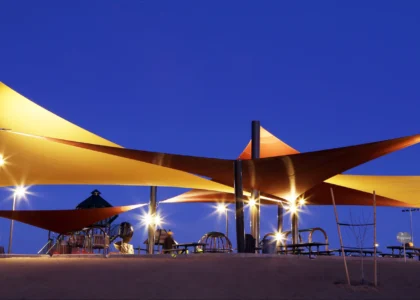
Playground shade structures cover play equipment and activity areas, protecting children during outdoor play periods. These structures must accommodate the footprint of play equipment while maintaining safe clearances.
Covered Walkways
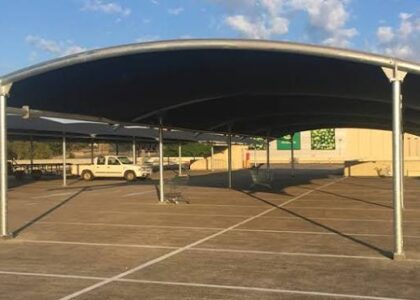
Walkway shades connect classrooms, administrative buildings, entrances, and parking areas. They provide continuous shade coverage for pedestrian movement across campus, particularly important when students move between buildings throughout the day.
Courtyard and Assembly Area Shades
Larger shade structures can cover courtyards and assembly areas used for gatherings, outdoor learning, and school events. These may use tensile membrane designs that span wide areas with minimal support columns.
Sports Court Shades
Sports courts require shade structures that account for visibility, clearance for physical activity, and the specific requirements of different sports. High clearance and appropriate column placement are essential considerations.
Drop-Off and Waiting Areas
Covered drop-off zones and waiting areas improve comfort for students, parents, and staff during arrival and dismissal times. These structures often connect to school entrances and parking areas.
Outdoor Classrooms
Shaded outdoor spaces can serve as extensions of the classroom, providing alternative learning environments during favorable weather conditions.
Types of School Shade Structures
UAE suppliers offer several configurations suitable for school applications:
– Tensile membrane structures – Fabric membranes stretched between anchor points, creating flowing architectural forms with minimal columns
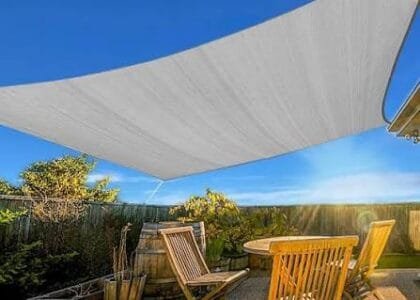
– HDPE shade sails – High-density polyethylene fabric panels in triangular, square, or custom shapes, stretched between posts or building attachment points
– PVC-coated fabric structures – Fully waterproof membrane options for applications requiring complete rain protection
– Pyramid and cone shades – Steel-framed structures with peaked fabric roofs providing 360° coverage over defined zones
– Hip-roof canopies – Conventional framed structures with sloped fabric or panel roofs
– Flat or pergola-style canopies – Simple frame structures with flat or slightly sloped covers, often using polycarbonate panels
– Wave or curved shade structures – Architectural designs that combine functional shading with distinctive visual appeal
The appropriate choice depends on the area to be covered, desired aesthetics, structural requirements, and intended use.
Best Materials for School Shades
Shade structure performance depends heavily on material selection. Key components include:
– HDPE shade fabric – Woven polyethylene fabric offering 90–95% UV blockage with good airflow. Cost-effective and widely used for playground and general shading applications
– PVC-coated fabric – Waterproof membrane material providing full UV protection and rain exclusion. Suitable for walkways and areas requiring weather protection
– PTFE or specialized membranes – Premium materials offering exceptional durability and self-cleaning properties for high-specification projects
– Steel structural frames – Galvanized steel provides strength and corrosion resistance for UAE conditions
– Aluminium components – Lighter alternative where weight or corrosion resistance is a priority
Important characteristics to evaluate include UV resistance, weather durability, maintenance requirements, and available colour options that complement school branding.
Child Safety Considerations
School shade structures require careful design beyond standard commercial installations. Key considerations include:
– Smooth and rounded edges – All structural elements within reach of children should have no sharp edges or corners
– Appropriate post placement – Support columns must be positioned to avoid creating hazards in play areas or obstructing sightlines
– Safe clearances – Structures should not interfere with playground equipment fall zones or create entrapment risks
– Secure fixings – All connections and anchors should be tamper-resistant and regularly inspected
– Trip hazard avoidance – Base plates and anchor points should be flush or properly covered
– Suitable structure height – Minimum clearance heights must account for safe use by children and adults
– Non-toxic materials – Fabric and frame finishes should be safe for contact with children
Schools should verify that suppliers provide appropriate safety documentation and that installations meet relevant authority requirements. Note that no shade structure alone guarantees children‘s safety; proper supervision and maintenance remain essential.
How Much Do School Shades Cost in the UAE?
School shade costs vary significantly based on project-specific factors. Main cost drivers include:
– Total area to be covered – Larger spans require more material and structural support
– Type of structure – Simple shade sails cost less than engineered tensile membranes or framed canopies
– Fabric or roofing material – HDPE is generally more economical than PVC or PTFE membranes
– Frame material and finish – Galvanized steel is standard; specialized coatings or aluminium increase cost
– Number of structures – Multiple smaller structures versus one large installation affects overall pricing
– Custom design requirements – Non-standard shapes or architectural features add design and fabrication time
– Foundation requirements – Ground conditions and anchoring needs vary by site
– Installation complexity – Site access, existing structures, and coordination requirements affect labour costs
– Site preparation and delivery – Location within the UAE and site conditions impact logistics
As a general planning reference, one UAE supplier indicates that a school playground tensile shade covering approximately 500 square metres may start from AED 60,000 to 120,000 depending on design complexity and support requirements. However, this is indicative only. Prices fluctuate based on market conditions, material costs, and project specifications. Schools should obtain detailed site-specific quotations from multiple qualified suppliers.
How to Choose a School Shade Supplier
When evaluating shade suppliers for educational projects, consider:
– Experience with school and educational projects – Familiarity with child safety requirements and school environments
– Previous school installations – Request references and site visits to completed projects
– Material specifications – Clear documentation of fabric type, UV rating, and frame materials
– Design and engineering support – In-house capability to design structures suited to your specific site
– Installation process – Understanding of how installation will be managed around school operations
– Maintenance services – Availability of inspection, cleaning, and repair services
– Warranty terms – Coverage for both fabric and structural components
– Safety documentation – Certificates for fire retardancy and material safety where applicable
– Project timeline – Ability to complete work during school holidays or with minimal disruption
– Relevant authority requirements – Knowledge of municipality and education authority approvals
Questions to Ask Before Installing School Shades
Before committing to a shade project, schools should clarify:
– What material will be used for the fabric and frame?
– What areas will the structure cover, and does it meet required coverage percentages?
– Is installation included in the quoted price?
– What foundation work is required, and who is responsible?
– How will the structure be maintained and inspected?
– What warranty is provided on materials and workmanship?
– Is the fabric UV-resistant and fire-retardant certified?
– How will posts and fixings be positioned to ensure child safety?
– Does the design require approvals from municipality or education authorities?
– Can installation be scheduled during school holidays?
School Shades and UAE Weather
Shade structures in the UAE must be designed for local conditions including intense sunlight, high temperatures, dust and sand exposure, occasional strong winds, and rain during winter months. Appropriate engineering should account for wind loads, drainage, and material durability specific to the installation location.
No shade structure is completely weatherproof. Schools should select structures appropriate for their intended use and understand the limitations of different materials and designs.
How Schools Can Reduce Shade Installation Costs
Practical approaches to managing project costs include:
– Plan the entire site before installation – Avoid piecemeal additions that may cost more overall
– Prioritize high-use areas – Focus initial investment on playgrounds and walkways with the greatest daily use
– Compare multiple quotations – Obtain detailed quotes from several suppliers to understand market pricing
– Select appropriate rather than excessive coverage – Match shade area to actual needs
– Request complete cost breakdowns – Ensure quotes include all components, not just headline figures
– Consider maintenance requirements – Lower-maintenance materials may offer better long-term value
– Schedule installation during school holidays – Can reduce disruption and potentially installation costs
Safety and material quality should not be compromised solely to reduce upfront costs.
Final Verdict
School shades in the UAE help educational institutions make better use of outdoor spaces while reducing direct sun exposure for students and staff. The right solution depends on the school‘s layout, intended use of outdoor areas, material preferences, safety requirements, budget, and local conditions.
Schools in Dubai, Abu Dhabi, Sharjah, and across the UAE should work with experienced shade specialists who understand educational environments and can provide detailed, site-specific quotations. A well-planned shade project can transform outdoor areas into comfortable, functional spaces that support student activity and wellbeing throughout the school year.