Which Shade Structures Are Best for Outdoor Nursery Play Areas?
Outdoor play is an important part of children’s learning and development. It gives them space to run, explore, exercise, and interact with other children. However, direct sunlight and high temperatures can make outdoor play uncomfortable and potentially unsafe, especially in nurseries.
Installing suitable shade structures helps nurseries create more comfortable outdoor environments. The best options include HDPE shade sails, tensile fabric canopies, pyramid shades, and fixed playground shelters.
For nurseries in the UAE, shade structures should provide strong UV protection, allow airflow, withstand hot weather, and meet children’s safety requirements.
Why Do Outdoor Nursery Play Areas Need Shade?
Children spend time playing on slides, swings, climbing frames, and other outdoor equipment. Without proper shade, these areas can become very hot during sunny weather.
Here are some important reasons to install shade structures:
- UV protection: Quality shade fabric helps reduce children’s exposure to harmful ultraviolet rays.
- Heat reduction: Shade limits direct sunlight on playground equipment and ground surfaces.
- Comfortable play environment: Children can enjoy outdoor activities in a more comfortable space.
- Equipment protection: Shade helps protect plastic playground equipment, flooring, and other materials from continuous sun exposure.
- Better use of outdoor space: Nurseries can make their playgrounds more usable during suitable outdoor activity hours.
Shade should cover both play equipment and nearby seating or resting areas. It is also important to consider the movement of the sun when planning the structure.
Best Types of Shade Structures for Outdoor Nursery Play Areas
Different shade structures are available for nurseries, schools, and childcare facilities. The right choice depends on the playground size, equipment layout, weather conditions, and budget.
1. HDPE Shade Sails
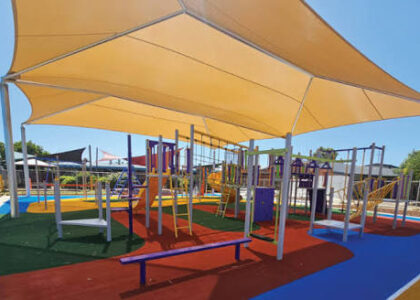
HDPE (High-Density Polyethylene) shade sails are among the most practical options for outdoor nursery play areas. They use specially designed fabric stretched between supporting posts to create shaded spaces.
Their breathable material allows air to pass through, helping prevent excessive heat from collecting underneath.
Main benefits:
- Provides UV protection.
- Allows natural airflow.
- Available in different colours and shapes.
- Suitable for large and small playgrounds.
- Can be installed over slides, swings, and seating areas.
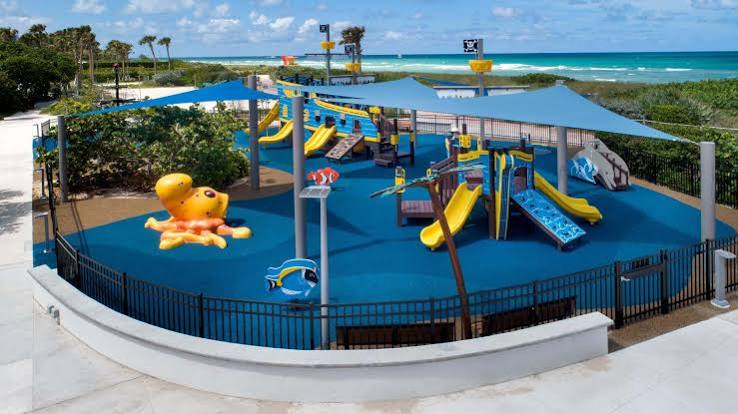
Multiple overlapping shade sails can cover irregular playground layouts and create colourful outdoor spaces.
2. Tensile Fabric Shade Structures
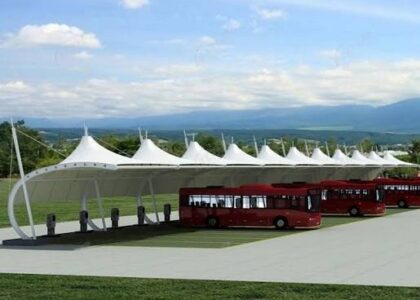
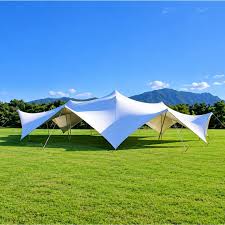
Tensile shade structures use a stretched fabric membrane supported by a strong steel framework. They can be designed in different shapes, including curved, wave-shaped, and pyramid-style roofs.
These structures are suitable for nurseries that need permanent and visually attractive shade coverage.
Main benefits:
- Customisable shapes and dimensions.
- Suitable for large playgrounds.
- Provides protection from direct sunlight.
- Can be designed to cover several play zones.
- Offers a modern architectural appearance.
For UAE installations, the fabric and supporting structure should be selected according to the local temperature and wind conditions.
3. Pyramid Shade Structures
Pyramid shades have a raised central point with fabric extending towards the supporting posts. Their shape creates a sloping roof that can cover a defined playground area.
They are commonly used in school and nursery playgrounds because they provide useful coverage and can be installed in different sizes.
Main benefits:
- Attractive and child-friendly appearance.
- Suitable for individual play zones.
- Customisable fabric colours.
- Sloping design helps rainwater drain when properly engineered.
- Can cover playground equipment and seating areas.
4. Hip Roof Playground Canopies
Hip roof canopies have a sloping roof design supported by a steel frame. They are useful when a nursery needs a defined covered area with relatively consistent shade.
They can be designed to cover a complete play zone rather than only selected pieces of equipment.
Main benefits:
- Provides broad overhead coverage.
- Suitable for permanent installations.
- Can be designed with durable outdoor fabrics.
- Protects playground equipment from direct sunlight.
- Offers a neat and organised appearance.
5. Flat Frame Canopy Shades
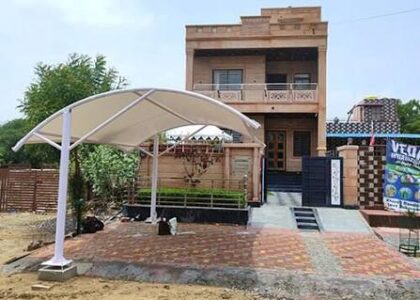
Flat frame canopy shades use a supporting structure with a flat or slightly sloped roof. They can cover outdoor play areas, walkways, and children’s seating spaces.
Nurseries can choose suitable HDPE fabric for airflow or another roofing material when additional weather protection is required.
Main benefits:
- Covers larger rectangular spaces.
- Provides a simple and organised design.
- Can be customised according to playground dimensions.
- Suitable for different outdoor layouts.
6. Natural Shade from Trees
Trees are another useful way to provide shade in nursery playgrounds. Their canopies can create comfortable resting and play areas while improving the appearance of outdoor spaces.
However, nurseries should choose suitable tree species and consider maintenance, falling branches, roots, and supervision requirements.
Natural shade works particularly well when combined with built shade structures.
Which Shade Fabric Is Best for Nursery Playgrounds?
The fabric is one of the most important parts of a playground shade structure. It affects UV protection, airflow, durability, and maintenance.
| Fabric type | Main features | Suitable application |
|---|---|---|
| HDPE shade fabric | Breathable, UV-stabilised, allows airflow | Nursery playgrounds and outdoor play zones |
| PVC-coated polyester | Strong membrane with waterproof options | Covered seating and sheltered outdoor spaces |
| PTFE-coated fibreglass | Specialised architectural membrane | Large, premium permanent structures |
For most open-air nursery playgrounds in the UAE, quality UV-stabilised HDPE fabric is a practical choice because it combines sun protection with ventilation. PVC-coated fabric may be more suitable when waterproof coverage is also required.
When choosing fabric, ask the supplier for certified UV protection information instead of relying only on general marketing claims.
Important Safety Features for Nursery Shade Structures
Safety should be a priority when installing any structure in an area used by young children.
Consider the following requirements:
- Strong foundations: Supporting posts should be securely anchored and designed for the expected wind loads.
- Smooth finishes: Avoid sharp edges, exposed bolts, and protruding metal parts.
- Safe clearances: Maintain suitable space around slides, swings, climbing equipment, and other play structures.
- Secure fabric: Make sure the shade membrane is properly tensioned and has no loose or damaged sections.
- Good visibility: The structure should not create hidden areas that make it difficult for staff to supervise children.
- Safe ground surfaces: Use suitable playground flooring that reduces injury risks and does not become excessively hot.
- Regular inspections: Check the fabric, frame, fixings, and foundations for damage or wear.
A qualified structural professional should assess permanent installations. Playground shade guidance also highlights the importance of avoiding climbing hazards and maintaining suitable clearances.
Are Playground Shade Structures Suitable for the UAE Climate?
Yes. Properly designed shade structures can be used in nursery playgrounds throughout the UAE. However, the hot climate requires careful selection of materials and installation methods.
Nurseries should consider:
- UV-stabilised fabrics designed for strong sunlight.
- Breathable materials that allow hot air to escape.
- Corrosion-resistant steel frames.
- Strong foundations suitable for local wind conditions.
- Light-coloured or heat-conscious playground surfaces where appropriate.
- Regular cleaning to remove dust and sand.
- Professional inspections and maintenance.
It is also important to position the structure according to the sun’s movement. A canopy that provides shade in the morning may not cover the same playground equipment during the afternoon.
How to Choose the Right Shade Structure for a Nursery
Before selecting a shade structure, nursery owners should assess their outdoor space and daily activities.
1. Measure the playground: Identify the total area that needs shade and note the positions of existing equipment.
2. Identify the main play zones: Decide whether the structure should cover slides, swings, climbing frames, toddler areas, or the entire playground.
3. Consider the children’s age group: Younger children may need more carefully planned shade over their play and resting areas.
4. Select suitable fabric: Compare UV protection, ventilation, durability, and maintenance requirements.
5. Check the structure design: Choose a design that provides adequate coverage without creating obstacles for children or staff.
6. Set a maintenance plan: Arrange regular cleaning and inspections to keep the structure in good condition.
7. Consult an experienced installer: Ask for a site assessment, structural design, material specifications, and installation details.
Frequently Asked Questions
1. Which shade structure is best for nursery playgrounds?
HDPE shade sails and tensile fabric canopies are practical options for most nursery playgrounds. They provide sun protection while allowing airflow. The best design depends on the playground layout and required coverage.
2. What is the best fabric for outdoor nursery shades?
UV-stabilised HDPE fabric is a popular choice because it provides shade while allowing air to circulate. PVC-coated fabric can be considered when waterproof coverage is also needed.
3. Can shade structures cover an entire nursery playground?
Yes. Large tensile structures, hip roof canopies, and multiple connected shade sails can be designed to cover larger playgrounds. A site assessment helps determine the required dimensions and support positions.
4. Are colourful shade sails suitable for children’s play areas?
Yes. Shade sails are available in different colours and can create an attractive playground environment. However, fabric quality, UV protection, and structural safety should be more important than colour selection.
5. Do nursery shade structures require maintenance?
Yes. Regular cleaning and inspection are important. Nurseries should check for fabric damage, loose connections, corrosion, and problems with supporting posts or foundations.
6. Can shade structures reduce playground equipment temperatures?
Yes. By blocking direct sunlight, shade structures can help reduce heat exposure on playground equipment and surrounding surfaces. Actual temperatures depend on the material, airflow, weather, and amount of shade provided.
Conclusion
Choosing the right shade structure for an outdoor nursery play area helps create a more comfortable and protected environment for children. HDPE shade sails, tensile fabric canopies, pyramid shades, hip roof canopies, and natural tree shade are all useful options.
For nurseries in the UAE, breathable UV-resistant fabric, strong supporting frames, safe installation, and proper playground coverage are particularly important. A professionally designed shade system can help nurseries make better use of their outdoor spaces while supporting children’s comfort and safety.